Home & living · 6 min read
Planning regular home cleaning
How a room list, one cycle per task and a fixed weekday turn into a plan that holds without constant discussion.
An article by MilieuLux · Audience: Private households
The article
Regular cleaning should make everyday life easier rather than trigger a fresh round of discussion each time. To achieve that, rooms, priorities, sensitive surfaces, pets, access and preferred products are settled at the outset. Planning regular home cleaning therefore means answering those six points exactly once, in writing, and merely updating them afterwards. This article sets out how such a plan is built, which task belongs in which cycle, and where fixed appointments usually come apart in practice. It is useful even if you do the work yourself.
Start with the rooms, not with the tasks
Most plans begin with a list of jobs: vacuum, mop, dust. The reverse order works better. Walk from room to room once and note, for each room, the flooring, the number of water outlets, everything delicate and everything nobody should touch. Tasks repeat in every room; the time they take and the method do not. The same mopping pass takes longer on oiled floorboards than on tiles, and on laminate too much water does damage. One photograph per room, taken from the doorway, saves three follow-up questions later — with an enquiry as much as with a stand-in arriving for the first time.
Not everything belongs in every visit
Not every task has to happen at every appointment. Floors, bathroom and kitchen can be scheduled more often; windows, cupboards or special areas at longer intervals. A good list distinguishes between standard tasks and occasional extras. In practice a single figure behind each line is enough: 1 for every visit, 2 for every second, 4 and 12 for whatever a quarterly or annual turn covers — right up to a one-off deep clean. One glance then shows whether a single visit is overloaded. Radiators do not belong in January under that scheme but before and after the heating season, because dust bakes onto the fins while they run. Light switches, door handles and remote controls get a line of their own, since they reliably vanish under the heading of dusting.
Spread the extras instead of bundling them
A common mistake is to pile every extra job onto one visit per quarter. That single visit then takes twice as long as the others, which shows up immediately on an invoice based on hours worked and is hard to fit into a calendar. Rotation holds up better: each visit carries the standard scope of maintenance cleaning plus exactly one extra, and the extras work through the list in order. With eight extra jobs and a fortnightly rhythm, each one comes round roughly every four months, and no single visit falls out of the ordinary. Simply number the list. Whoever stopped at number five last time knows what is due now without asking.
Walking costs more time than surfaces do
Working strictly room by room, fetching bucket, cloths and vacuum again for each one, loses more time in the hallway than at the surfaces themselves. It is quicker to do like with like in one circuit of the whole home: first every waste bin, then every contact surface, then the floors. The second rule concerns dwell time, the only span in a cleaning plan that comes free. Setting the shower and WC going at the start and turning to the kitchen afterwards saves the second round of scrubbing. Floors come last in each room, otherwise whatever falls from above is picked up twice.
What happens between the visits
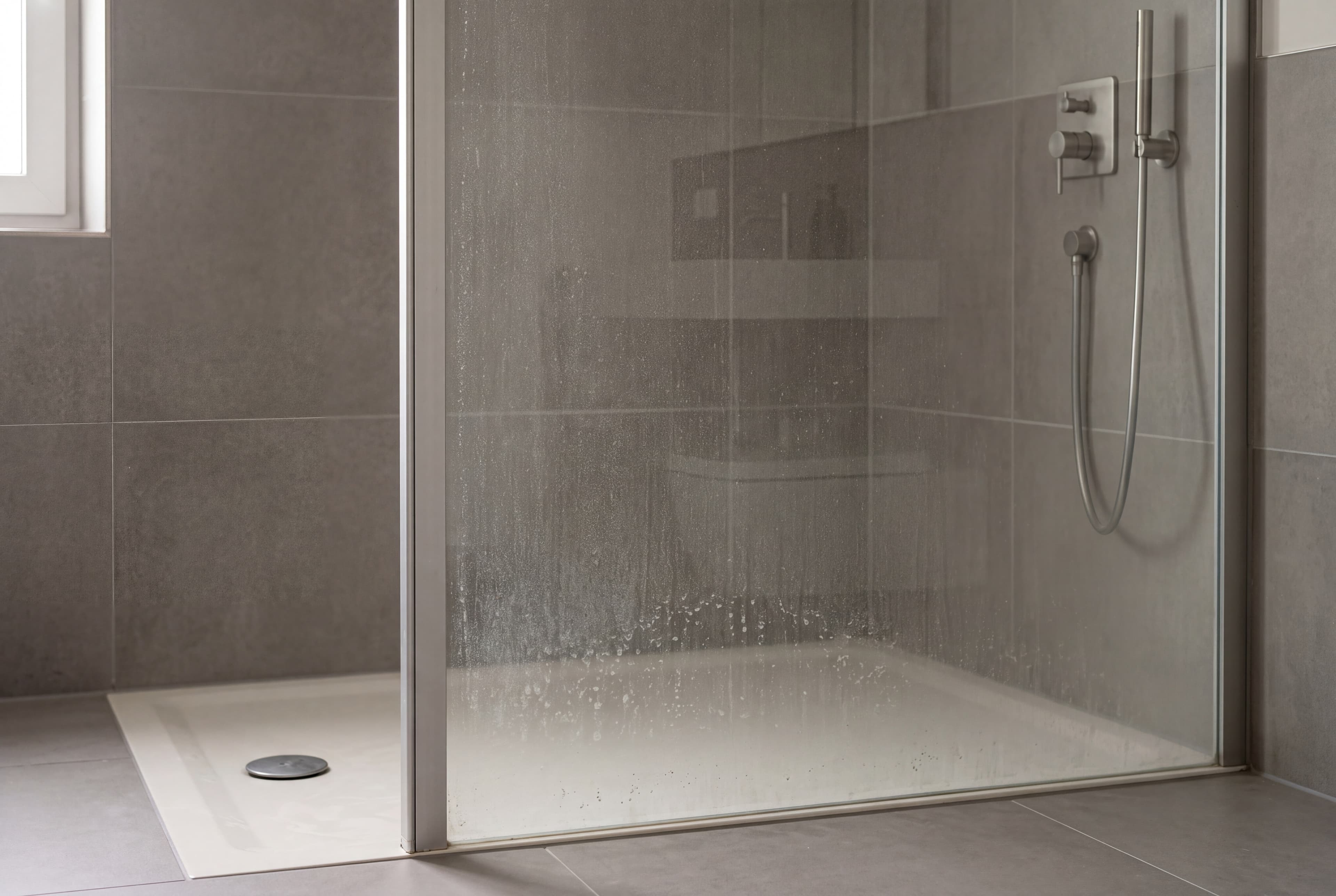
How long a visit takes is decided in good part on the days in between. Munich tap water sits in the hard range; rings therefore form quickly on glass, taps and dark tiles. A squeegee after showering costs a few seconds and spares the next visit the dwell time for limescale remover. The same goes for the hob while it is still warm and for the strainer in the kitchen drain. And one obvious point that still belongs in the plan: tidying is not cleaning. If surfaces are meant to be clear, it has to be recorded who clears them, otherwise the work happens around the objects, which was not the intention.
Dates, public holidays and capacity
Intervals are agreed with MilieuLux by calendar. Weekly, fortnightly or individually arranged appointments are possible, subject to capacity. When choosing the weekday, it pays to look at the Bavarian holiday calendar: a Monday slot predictably loses Easter Monday and Whit Monday, while a Thursday slot runs into Ascension Day and Corpus Christi. Decide once, in principle, whether a lost appointment is brought forward, made up later or skipped; that saves the discussion at every single holiday. Work takes place Monday to Friday between 08:00 and 20:00, with Saturday and Sunday outside that. Anyone with nobody at home on weekdays therefore needs a workable access arrangement from the start.
The Munich year shifts the plan
A plan that treats twelve months alike misses reality in at least three places. In spring, pollen settles on window sills, balcony furniture and pale floors in quantities an ordinary mopping pass does not pick up. In winter, shoes carry grit and road salt indoors; on oiled boards and on parquet, salt rings should be removed early, because they attack the protective layer. And once the heating season starts, dust levels rise in rooms that stood open to the air for weeks. What stays outside is the snow work itself: clearing and gritting in front of the building is winter service and not part of what MilieuLux offers.
Several people, one plan
In households with more than one adult, most misunderstandings arise in the arrangement rather than in the work. Name one person who keeps the plan and reports changes; instructions coming from two directions reliably lead to one task being done twice and another not at all. Shared flats additionally need to settle which rooms form part of the job at all. Limiting it to kitchen, bathroom, hallway and the communal room is common, because private rooms are used very differently and the effort otherwise cannot be shared fairly. Anyone splitting the cost should have that boundary in writing before the first invoice arrives.
What does not belong in a cleaning plan
A plan becomes more robust when it also states the opposite. Cleaning does not replace repair: a dripping trap, a loose tile or a perished seal are unchanged after the visit and belong to the trades. Care, companionship and nursing support are likewise no part of domestic cleaning; that calls for different training and different insurance cover. Also not on offer are pest control, façade cleaning, tree felling and specialist medical disinfection. Ruling such points out from the beginning spares you the unpleasant version: an expectation that only surfaces on the day and helps nobody at that stage.
A good plan is rarely touched again
Recurring contracts are particularly comfortable, because over time the team gets to know the rooms and your preferences. Changes remain open to discussion at any point nonetheless. It is worth going through the list deliberately after the first four to six visits instead of letting it run on unexamined. By then it is clear which extra is needed more often than expected and which line can be dropped without replacement. After that, one review a year is enough, usually alongside a change that is happening anyway: new flooring, a child, an animal, a study. What stays the same needs no discussion, and that is the entire point of the exercise.

Related questions
How often should a home be cleaned?
There is no universal figure. What matters is the number of people living there, pets, the flooring and whether outdoor shoes are worn indoors. A household with a dog and floorboards needs a different rhythm from a two-room flat with tiles. Start with the interval that seems realistic to you and correct it after a few visits, based on the actual condition.
Do I have to commit to a fixed interval?
No. What is agreed is a rhythm in the calendar, not a contract term. Individual appointments can be moved or cancelled, and there is no minimum order value. If the gap turns out to have been too short or too long, it gets changed.
What does a regular appointment cost?
Price on request. Price on request. Price on request.