Business · 5 min read
How often should an office be cleaned?
Why the answer depends on the individual area rather than on the floor space of the whole office.
An article by MilieuLux · Audience: Businesses
The article
How often should an office be cleaned? The question sounds as though it wants a single number, and there is none that fits every business. What decides it is the number of staff, visitors, workstations, washrooms and shared areas. A small office with few callers needs a different rhythm from a shop, an agency running meetings all day, or a site with a kitchen and several toilets. This article sets out which factors actually drive that rhythm, how to recognise an interval that no longer fits, and what can be changed without renegotiating anything.
Split by area, not by floor space
The sensible starting point is a split by area. Washrooms and kitchen surfaces usually need the shortest intervals. Workstations, floors and meeting rooms can be planned according to use. Entrance areas react far more strongly to weather and visitor numbers. Rather than cleaning everything equally often, a workable service plan emerges. In practice each area is written down separately and given its own frequency, instead of one figure covering a whole floor. Four lines are normally enough: washrooms, kitchen, circulation areas, and work and meeting rooms. Keep to that grid and a single line can be changed later without reopening the entire arrangement.
What really shifts the rhythm
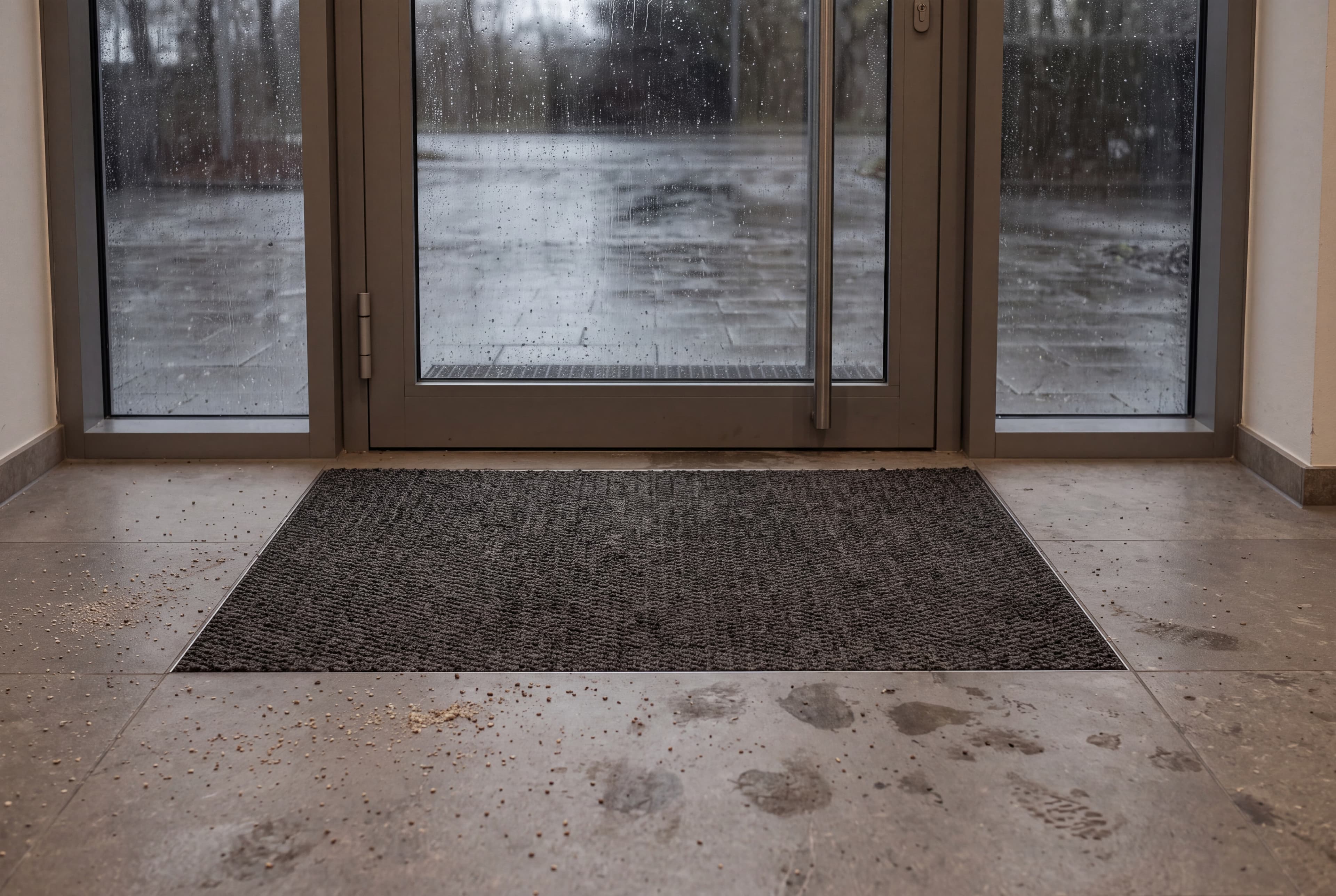
Three factors move the rhythm more than floor area does. First, the number of uses per washroom unit: twenty people sharing one unit generate more demand there than the same twenty spread across three. Second, the barrier matting at the entrance. A mat several paces long absorbs a substantial share of the dirt carried in and therefore lengthens the intervals on everything behind it; a mat that is too short does the opposite. Third, the flooring. Pale, glossy surfaces show smears and footprints within hours, while matt and mid-tone finishes take days. The finish changes nothing about hygiene, but it changes when a surface starts to look neglected.
Attendance, not headcount
Headcount appears on the payroll; it rarely appears in the office in full. In many businesses the busy days fall midweek, while Mondays and Fridays see only part of the team on site. For scheduling this means the office cleaning visit belongs on the evening of a heavily occupied day, or the morning after, not on the quietest day of the week simply because nobody is in the way. Check meeting room occupancy as well. A room with external guests every day soils differently from one used twice a month – glasses, table tops and chair backs are the real work there, not the floor.
The year changes the demand
An interval that works in June is often too long in November. Through the wet months shoes carry moisture, grit and salt residue into the entrance area; the barrier zone then needs shorter gaps while nothing changes at the desks. This refers strictly to what arrives inside the building – outdoor clearing and gritting services are not part of the offer. In summer the emphasis moves to the kitchen and to waste, because open windows, fruit and drinks leave more residue and refuse turns sour faster. Building both shifts into the plan from the outset avoids renegotiating twice a year.
How to spot the wrong interval
An interval that is too long shows first in consumables and waste, not in dust. If the bin regularly overflows a day before the next visit, or the soap dispenser runs dry between visits, the cycle is wrong regardless of how the surfaces look. A second sign is limescale around taps, a typical case for washroom cleaning in the office: it comes from the water rather than from use, and Munich tap water is comparatively hard, so it returns quickly. The opposite case exists too. Paying for the same untouched surfaces after every visit is a reason to move them into a longer cycle and spend the time where the load actually occurs.
Observe first, then decide
When setting things up, do not fix the cycle in advance – review it after four to six weeks. That period shows which area becomes noticeable before the next visit and which holds up without trouble. Two simple measures are enough: weekly consumption of paper and soap, and the number of comments that actually reach the office manager. Both take minutes to record and say more than a single walk-through. The grid is then adjusted – in practice upwards for washrooms and downwards for workstations.
A recurring contract as the calm option
For many businesses maintenance cleaning to a fixed service plan is the calmest solution. Appointments, access and tasks are agreed properly once and then continued under control. Changes – more staff, building work or seasonal dirt – can be added to the plan later. So that this does not stay a statement of intent, a fixed review date helps: once a quarter the plan is set against actual use and confirmed or amended line by line. Skip that review and after two years you are still running a plan written for an office that no longer exists in that form.
What more frequent cleaning cannot fix
A shorter interval is no substitute for a deep clean. If a floor has gone dull because maintenance product has built up layer upon layer, an extra mopping pass will not brighten it; it will slowly make it worse. Such surfaces need one deep clean, after which the normal cycle carries them again. The same applies to greyed grout in washrooms and to carpet tiles with trodden-in stains. And some things do not belong to cleaning at all: a dripping tap, a broken dispenser or a failed silicone joint are jobs for a trade contractor. Such findings are reported but not remedied – repairs and maintenance work are outside the scope.
How the actual need is recorded
MilieuLux does not ask for the square metres alone. We look at rooms, use, furnishing, flooring types, time windows and any particular requirements. From that comes a realistic estimate of time and a plan that matches everyday reality. It helps if three details are in the first message: how many washroom units there are, which flooring is in which area, and the window during which work is permitted. That is enough for a time range without anyone having to visit first. Work takes place Monday to Friday between 08:00 and 20:00, so a three-hour evening visit has to start by 17:00. Night and weekend appointments are not available, and we work within the Munich city area only.

Related questions
Is once a week enough for a small office?
For desks and floors, a weekly cycle usually holds in a quiet office without visitor traffic. The washroom is where it tips: as soon as more than a handful of people share one unit, a second visit per week becomes sensible even if the rest of the space stays as it is.
Can individual areas be cleaned more often than others?
Yes, and that is precisely what the grid is for. A common pattern is washrooms and kitchen at every visit, circulation areas at two visits in three, and workstations at one. The allocation is written into the service plan so it does not have to be explained again at each visit.
What does one extra visit per week cost?
Price on request. Price on request. An additional weekly visit therefore adds that item once, however many people attend. There is no minimum order value.