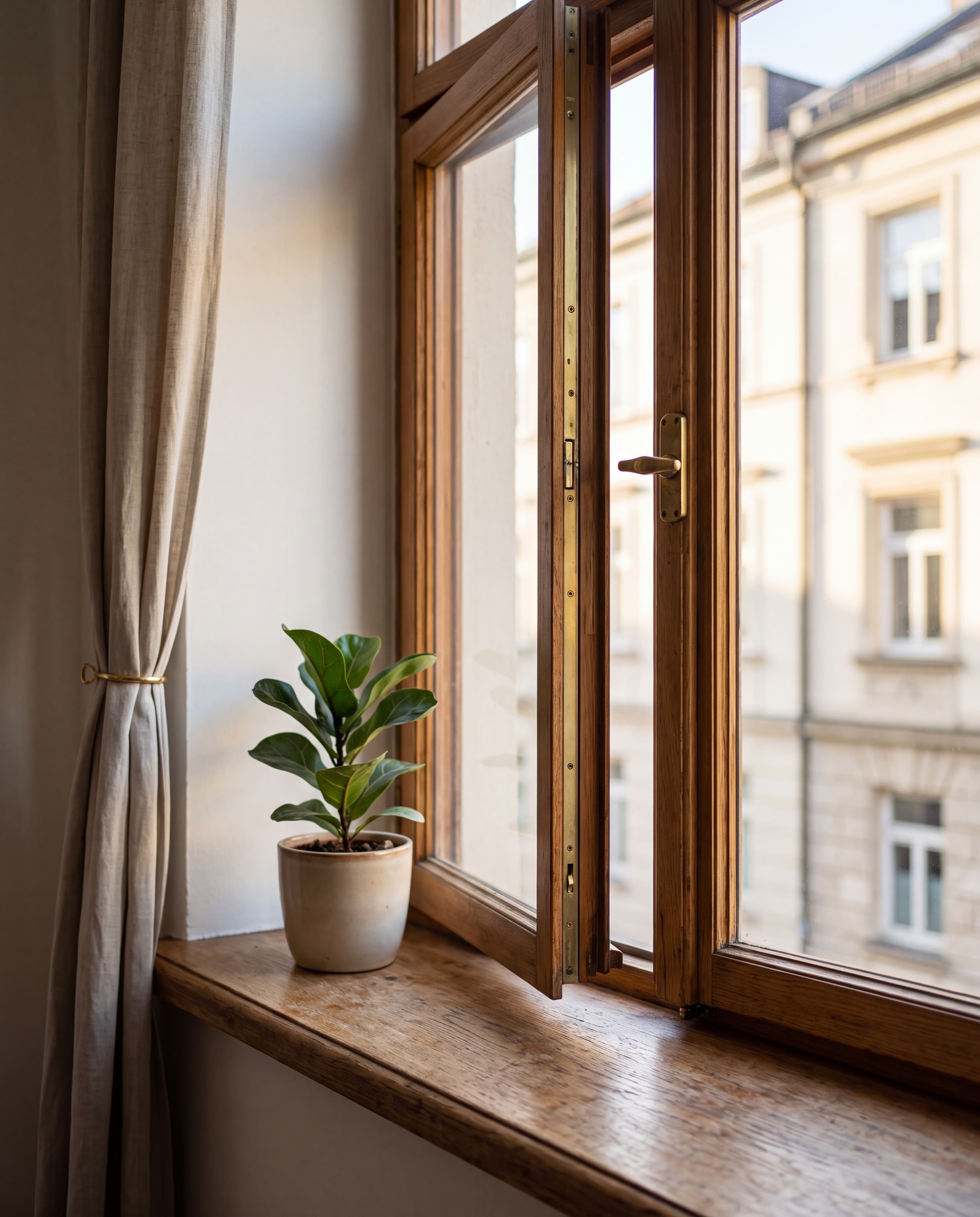
Cleaning · 5 min read
Window cleaning without unnecessary surprises
Where the effort actually comes from, which details make an enquiry reliable, and when an appointment belongs in another week.
An article by MilieuLux · Audience: Everyone
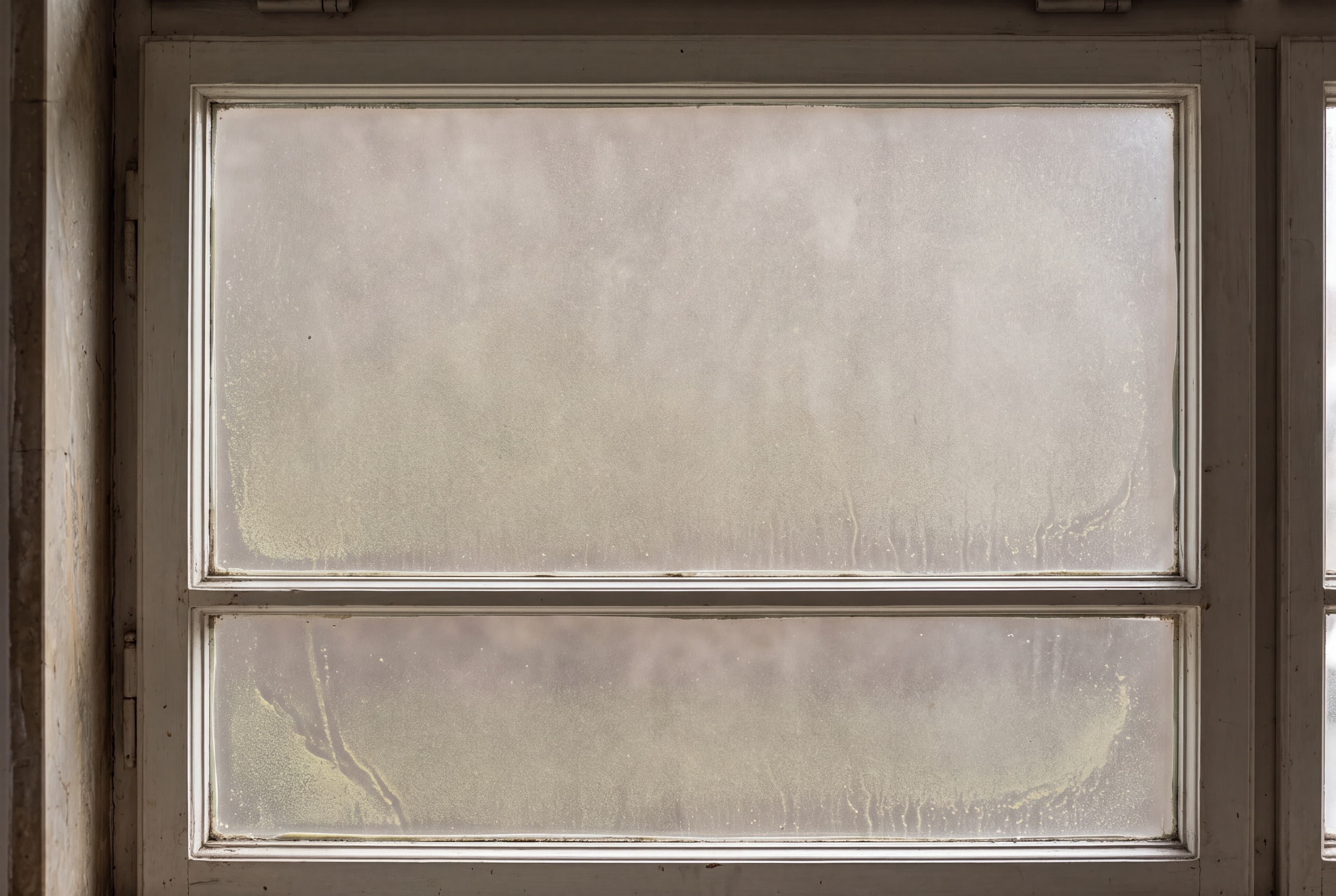
The article
The cost of window cleaning arises from working time, and working time cannot be derived from the number of windows alone. With windows, the count is not the only thing that matters. Large surfaces, many small panes, frames, rebates, heavy soiling and awkward access all change the working time. Conditions can also differ between the inside and the outside. Sorting these points out before enquiring produces a reliable estimate rather than a figure that has to be revised upwards on the day.
What costs time besides the pane itself
A noticeable share of the working time is not spent on glass at all. It goes on movement: filling buckets, changing water, carrying equipment from room to room, moving furniture aside and putting it back. In a period flat with four rooms and windows in each of them, that share weighs far more heavily than in a single room with one continuous window wall. The floor level without a lift and the distance between parking and the front door belong in the same category, which is why a provider should ask about them. If nobody asks, the quoted figure rests on an assumption that has never been checked.
Estimating window cleaning costs realistically
Price on request. Two people working three hours make six working hours — more people shorten the appointment, not the invoice. Price on request. One consequence is easily missed: two households in the same building placing separate orders are two jobs and each carry the flat rate once. There is no minimum order value, so a single room with three windows can be booked on its own.
What belongs in a good enquiry
A good enquiry states the number of windows, their approximate size, the floor and how accessible they are. Photos show whether ladders or special equipment would be needed. MilieuLux only takes on work that is safely accessible and within its own scope of services. Anyone comparing several quotes should also ask four questions, because that is precisely where the scope of work diverges: are frames and sills included? Are the rebates done as well? Does the price cover inside and outside or only one face? And what happens if an outside face is judged unsafe to reach once the team is on site? Two quotes that leave these points open are not comparable, however similar the totals look.
Safely accessible — what that means in practice
Whether a surface can be reached safely is something you can roughly judge yourself before enquiring. As a rule of thumb, anything within an outstretched arm from the floor of the room, from a balcony or from a low step is uncritical. As soon as somebody would have to climb onto a sill, lean over a parapet or set a ladder on soft garden soil, the range in which clean and safe work is possible has ended. The reverse case occurs just as often: a roof window on the second floor is straightforward from inside if the sash turns into a cleaning position, and impossible if it has no such function. A photo settles details like these faster than any description.
Weather: when an outside appointment makes no sense
Weather can play a part where outside surfaces are concerned. Heavy rain, frost or dangerous wind can make an appointment unreasonable. In such cases this is discussed early. What matters for planning is that a job can be split: the inside faces are unaffected by weather and can be done on the agreed day, with the outside faces following later. In cost terms this is no side issue, because the travel flat rate then arises on both working days. If your timing is flexible, it is better to move the whole appointment by a few days than to divide it. If you are working towards a handover date, the decision goes the other way and the second working day is accepted deliberately.
Mention coatings and films beforehand
Not every pane tolerates every method, and the eye rarely tells you which. Solar control or privacy films applied on the inside are considerably softer than glass: a blade that removes paint spots or adhesive residue from bare glass without risk destroys such a film in a single pass. There is also glazing with a factory coating on the outer face that tolerates neither abrasive products nor blades. Neither type of damage can be repaired — the film or the pane would have to be replaced. If anything on your windows has been filmed later or coated at the factory, that information belongs before the first appointment, not after it.
The right time of year
The best appointment is not necessarily the earliest available one. In spring, pollen lays a yellowish film on freshly cleaned outside faces within days; waiting until the main flowering is over means the work lasts longer. In summer, limes and maples leave a sticky, sugary deposit by way of aphids, which dissolves when wet and smears when dry — windows under such trees need an interval of their own. And if work on the building is due anyway, on the roof, the balconies or in the stairwell, window cleaning belongs at the end of that sequence rather than at its start.
An interval that suits the location
Having windows cleaned regularly often prevents stubborn deposits from building up badly. The right interval depends on location, traffic, weather and use. There is no need to guess it; a single cycle establishes it. Note the date of the last cleaning, then look at the same pane every few weeks with the sun low or in the evening against the light. The point at which the film becomes noticeable again in backlight is your interval. Inside and outside usually differ: indoors the gap is set by cooking vapours, pets and dry heated air, outdoors by the position relative to the road and the compass direction. The two do not have to fall on the same appointment.
Stairwells and shared windows
In apartment buildings, the windows in the stairwell, the cellar and the laundry room belong to nobody individually. Their cleaning is therefore rarely commissioned by individual residents but by the property management or the owners association, and it is usually settled through the service charges, as far as the tenancy agreement provides for it. For tenants this means in practice that a request for cleaner stairwell windows goes to the management first, not to a service provider. Property managers, in turn, do well to keep communal and flat windows out of the same job, because different access arrangements, responsibilities and invoice recipients sit behind them.

Related questions
Is a site visit needed before window cleaning?
Usually not. Windows can be assessed well from photos if there is one shot per room taken from a few metres back, plus a close-up of an opened sash including the rebate. Price on request.
Can I book the outside faces only?
Yes, and in households where the inside is cleaned regularly anyway it makes sense. Do not expect it to halve the time, though: travel, setting up and the routes through the flat stay the same, and with tilt-and-turn sashes the outer face is reached from inside the room, so both faces fall into one pass without any extra setup. Booking them separately does not mean working on them separately.
Do you need water and power on site?
A water point and a socket on site are enough; freely accessible outside taps are rare on Munich apartment buildings. In empty flats the water is often shut off and the meter removed. Please tell us in advance so we can plan the appointment accordingly instead of improvising on the day.