
Services
Stairwell cleaning in Munich
The entrance area is the first impression a building makes. MilieuLux looks after steps, landings, handrails and accessible communal areas at suitable intervals – of particular interest to property managers and owners’ associations.
Stairwell cleaning in Munich is calculated by entrances and storeys, not by floor area. What counts is the number of flights, the landings between them, the width of the steps and whether a basement stairway is included. A building with four storeys and two entrances takes noticeably more time than one with eight storeys and a single entrance, even though both house the same number of flats. For a reliable quote we need the number of entrances, storeys per entrance and which ancillary areas belong to the job.
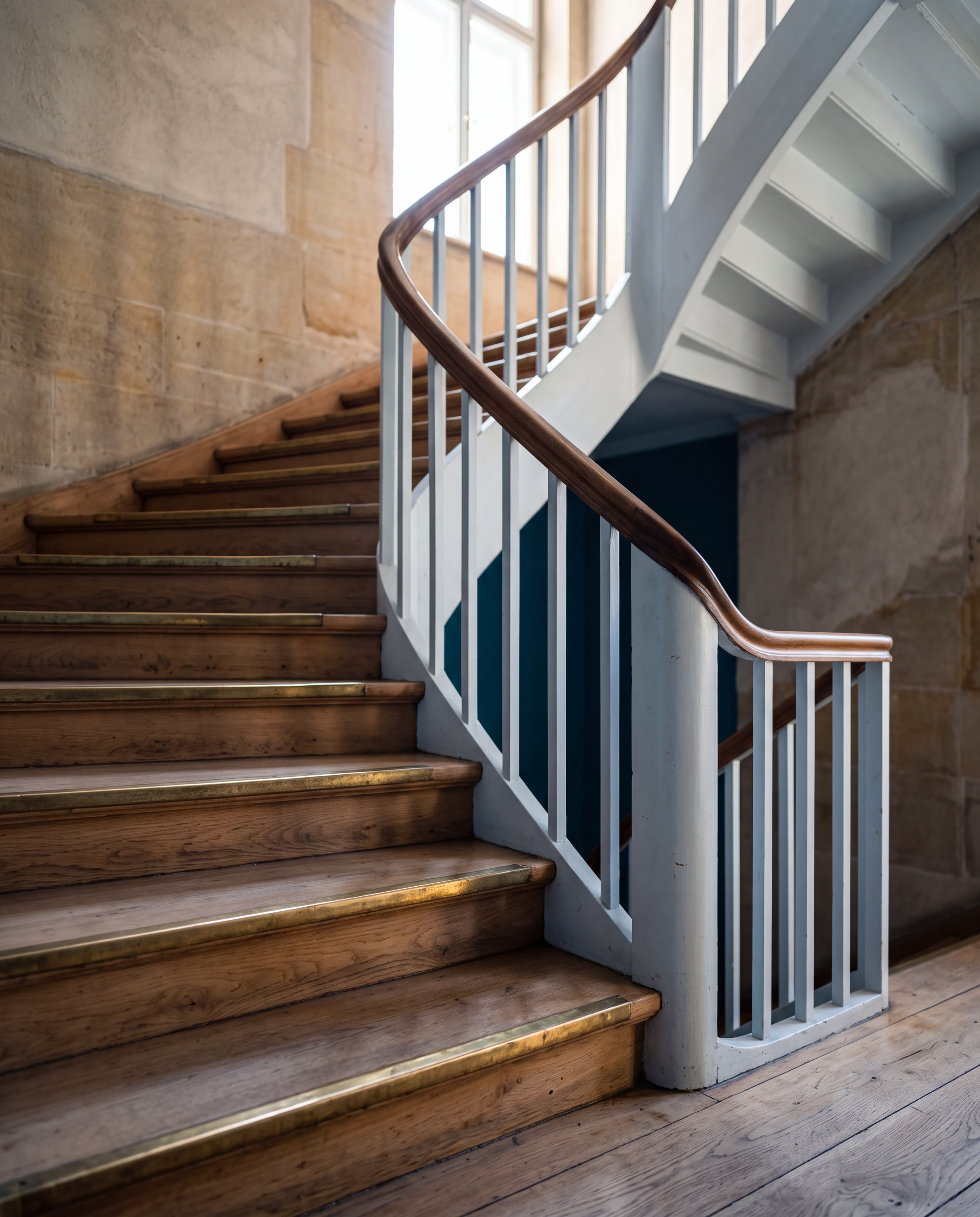
The step material determines the product, not the price. Limestone-based natural stone is more common in Munich stairwells than most people expect – Solnhofen slabs, marble, a large share of period staircases – and terrazzo belongs with them because it is cement-bound. A building with steps like these therefore costs no more with us. It simply tolerates less.
Typical work
Suitable for
- Apartment buildings and housing complexes
- Owners’ associations
- Property managers with several buildings
- Mixed residential and commercial buildings
- Period buildings with timber or stone staircases
Typical work
- Cleaning steps, landings and half-landings
- Wiping handrails and balusters
- Entrance area and barrier matting
- Letterbox unit and bell panel from outside
- Lift car, mirror and door sill tracks
- Basement stairway and accessible communal areas
- Contact surfaces such as handles and switches
- Picking up visible soiling in the hallway
Possible add-ons
- Glass in entrance and intermediate doors
- Deep cleaning of the staircase at longer intervals
- Cleaning after trade work in the building
- Light garden care for the front area by arrangement
Possible intervals
- Weekly
- Twice a week
- Fortnightly
- Monthly
- Shorter winter interval by arrangement
What matters here
Steps and handrail
Wooden staircases in period buildings are the second special case. Waxed or oiled steps may only be worked on with a barely damp cloth, because standing water runs into the joint between tread and riser and swells the timber there – the creaking everyone complains about later starts exactly that way. Sealed timber tolerates a little more, but no abrasives. Where the seal on the nosing has already worn through, we report it to the property manager instead of continuing to mop over it.
The handrail is the most frequently touched surface in the building and is still often treated in passing. A handrail across five storeys costs roughly as much time as two landings. Wooden handrails collect skin oils that plain water does not lift; on metal balustrades, dust settles on the upper faces of the horizontal rails and where the balusters meet them, out of sight from below. Handrail and balusters therefore appear as their own item in the service plan.
Entrance and lift
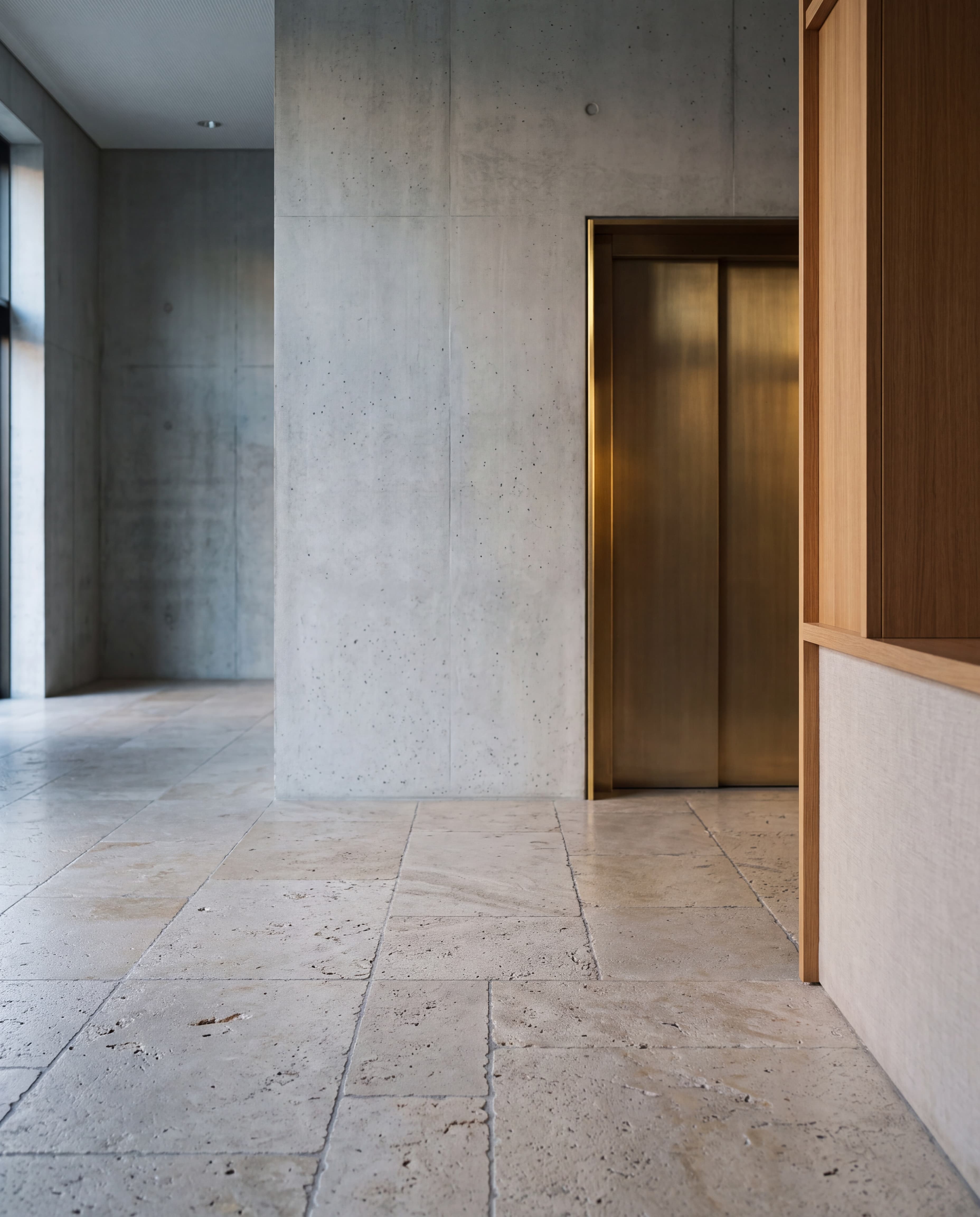
In the entrance area, the barrier matting decides what happens everywhere else. Matting that is too short releases dirt only on the second or third flight, where nobody expects it. The bell panel, letterbox fronts and door handles are included; stainless steel is wiped damp and then dried off, otherwise you are left with precisely the streaks nobody noticed before. We do not touch post. Leaflets left lying around are disposed of only if the property manager has expressly authorised it.
With the lift, the lower door sill track is the point that actually matters. Grit, sand and small objects collect there, and that is exactly where doors snag – one of the most common causes of fault reports in a housing complex. We vacuum out the track and clean the car floor, mirror and control panel. We do not work on the mechanism itself: shaft doors stay closed, panelling stays shut, and any spray goes onto the cloth, never onto the control panel.
Ancillary areas and winter
Basement stairways and ancillary areas are surprisingly often left out of the schedule, although they collect the most. The laundry room, bicycle store and the route to the bin room carry coarse dirt back upstairs. We do not clear away anything stored there – you cannot tell from the outside who owns an object. If something visibly blocks an escape route, we report it to the property manager with the date and location. That decision is made there, not by the cleaners.
Between November and March the work changes, not the contract. Grit has to be picked up dry first; spreading it wet sands down the step nosings. Road salt leaves white rims on natural stone and terrazzo that must be lifted with clean water – mop over them with a maintenance product and you seal them in, leaving the mark visible until spring. Many buildings switch to a shorter interval for these months. Snow clearing and gritting itself is not part of our offer.
Resolution and record
Who sets the schedule is usually laid down in the house rules or the declaration of division. In many Munich buildings, cleaning still rests with the residents; awarding it to a service provider then requires a resolution of the owners’ meeting and a matching apportionment. From that point the contract partner is the property manager, not the individual owner. For each building we need a named contact, the list of entrances and a statement of which areas are expressly excluded.
The record is kept not because of complaints but because of the vote: since we invoice hours actually worked rather than a flat rate, every line of the annual statement has to be traceable to a single appointment – otherwise the cost item cannot be defended in the meeting.
Access and keys
Access and keys are settled in writing before the first appointment. Often a separate fob is needed for each entrance, the basement runs on a different lock, and the front door belongs to a master key system in which one lost key quickly becomes expensive. Who holds which key is documented. Price on request.
Price
- per worker and working hour
- Price on requestper worker and working hour
- travel per working day — not per person
- Price on requesttravel per working day — not per person
- site visit, only if booked separately and without an order
- Price on requestsite visit, only if booked separately and without an order
What a working hour means
Billing is per person on site and per hour worked. Two people working three hours makes six working hours.
Assuming: An apartment building with 4 floors, 8 flats, entrance and basement stairs – once a week.
- Price on request
- Travel costs, once per working day
- Price on request
- Price on request
Per visit. For property managers we can bill per property and month on request.
How it works
Send your request
Choose whichever way of getting in touch suits you best.
Establish what is needed
We look at area, condition, timing, materials and any special requirements.
Confirm clearly
You receive a personal response and transparent terms.
Work to the list
We arrive at the confirmed time and work through the agreed service plan. If something does not get done, you hear it the same day.
Important limits
- No winter service, no snow clearing and no gritting
- No façade work and no façade cleaning
- No repairs or trade maintenance to stairs, doors or lift
- No work on lift machinery outside the car
- No removal of stored items without the property manager’s clearance
We deliberately stay within our field. What we cannot carry out safely and properly, we decline in advance rather than promise.
Frequently asked questions
How often should a stairwell be cleaned?
It depends on the number of households and on the location. Buildings with up to eight households usually do well on a fortnightly rhythm, larger complexes with several entrances on a weekly one. Buildings on busy roads or with a practice on the ground floor need shorter gaps. After the site visit we propose a schedule – including when a longer gap is enough.
Do you also clear snow and grit in winter?
No. Winter service is not part of our offer; you will need a separate provider for that. What we do handle is the winter dirt inside the building: grit carried in, salt rims on the steps and the more heavily used barrier matting. For November to March we can agree a shorter interval on request and switch back afterwards.
Who is our contract partner – the manager or the owners?
Usually the property manager, acting for the owners’ association. If the house rules still place cleaning with the residents, awarding the work first requires a resolution of the owners’ meeting. We provide a quotation that sets out the hours per entrance and per cycle, in a form that can be tabled at such a meeting.
What records do we get for the owners’ meeting?
For each visit we record the date, time, entrance, number of staff and hours worked. The invoice is built from that, and every item in the annual statement can be matched to an appointment. If complaints come from within the building, this shows when the last clean took place and how extensive it was.
Our staircase is natural stone. What do you watch out for?
Limestone-based natural stone and terrazzo do not tolerate acidic cleaners: limescale remover leaves dull patches that cannot be removed afterwards. We use neutral to mildly alkaline products and go sparingly with water so no film builds up. If the material is unclear, we establish it before the first visit and test an inconspicuous spot if in doubt.
Do you also clean the basement, laundry and bike room?
Yes, provided these areas are part of the contract and accessible. They often run on a longer cycle than the stairwells, because they see less traffic but carry coarser dirt. We do not clear away items stored there. If something visibly blocks an escape route, a report goes to the property manager.
What does cleaning one stairwell cost?
Price on request. How many hours an entrance needs follows from the storeys, the step material, the length of the handrail and any ancillary areas included. Price on request.
Goes well with
Shop cleaning in Munich
Sales floor, till area and entrance are done before the doors open.
Law firm cleaning in Munich
Cleaning in law firm premises with a settled team, a clear room list and distance from files and client appointments.
Glass cleaning in Munich
Glass doors, partitions and display cases – cleaned where hands actually touch them.
Maintenance cleaning in Munich
Recurring cleaning to a fixed service plan – each area on its own cycle.
Who we typically do this for

Talk to us
Tell us the area, the condition and your preferred date. We will get back to you personally with a reliable estimate – usually the same day during our availability hours.