
Service Area · District 17
Cleaning in Obergiesing and Fasangarten
Obergiesing sits on the slope above the Isar, and you notice it walking as much as working: the streets climb, and many buildings have half-landings and stairs in unexpected places. Fasangarten further south is flat and easy to read, with estate housing from the 1930s and 1950s. Two areas, two kinds of job.
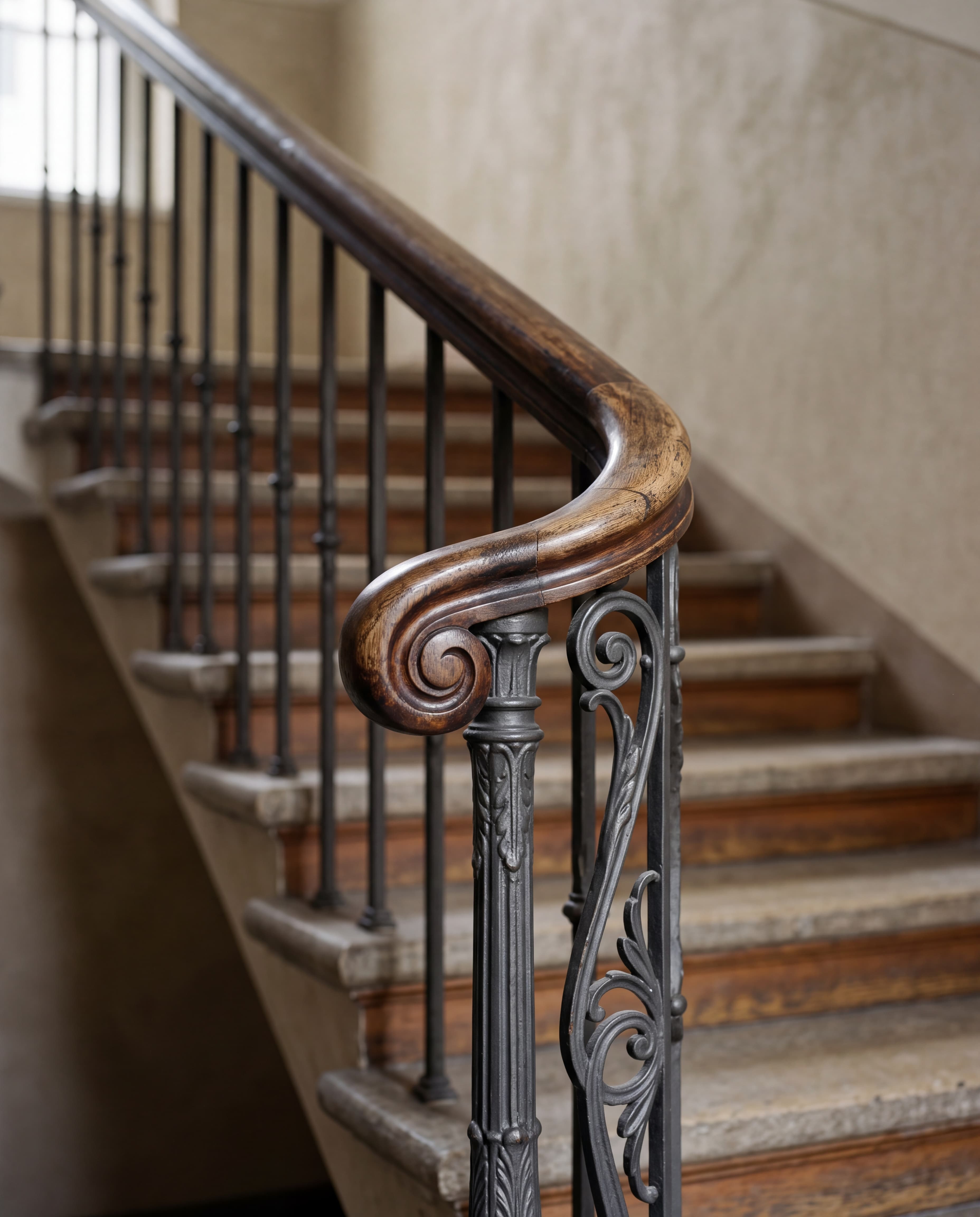
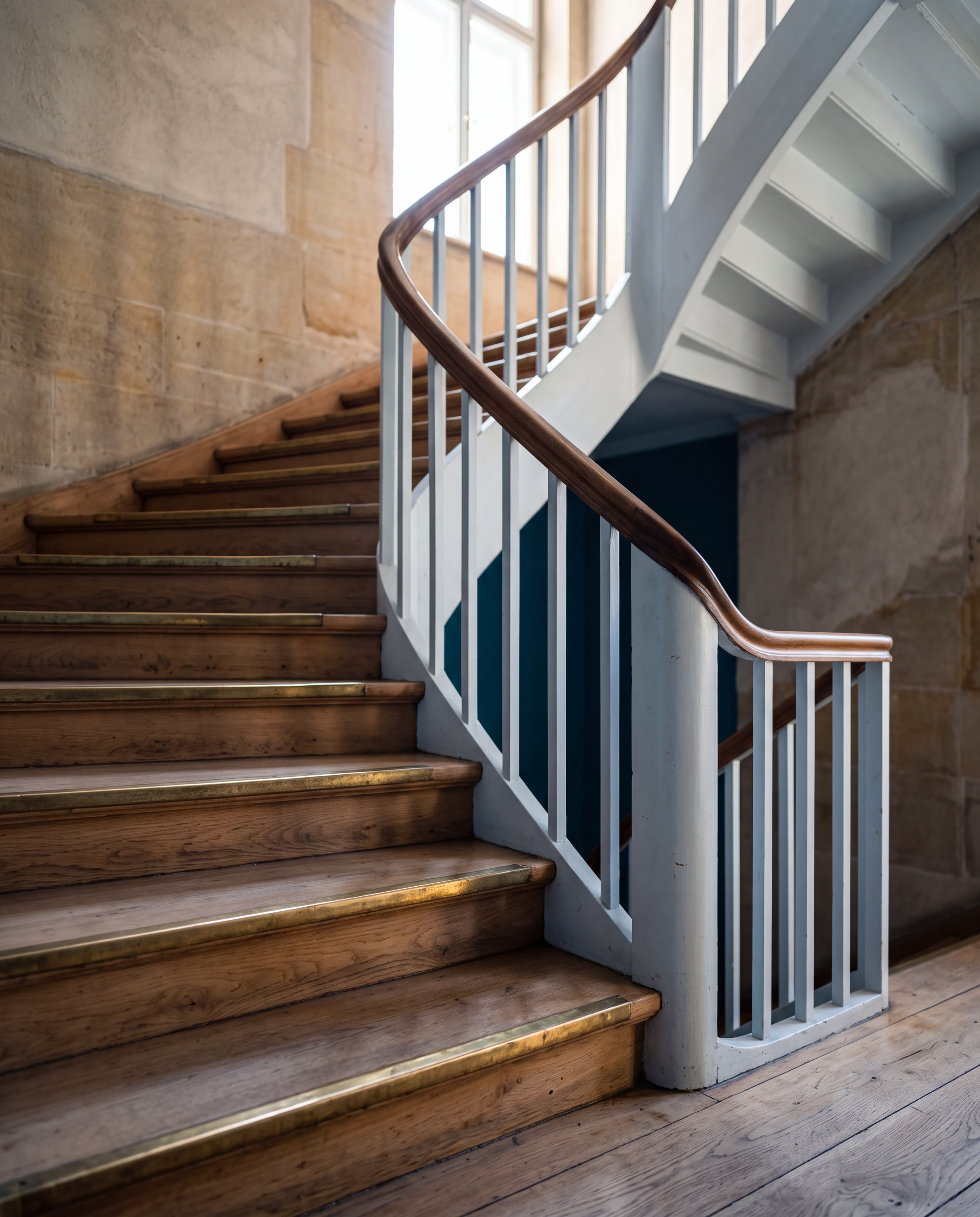
In Obergiesing the slope is not a detail but building history: build on a hillside and the house steps into the slope, which produces a half-storey to the street and a full one to the courtyard. In the stairwell that means intermediate landings, short flights and more edges per floor – and it is the edges that cost the time, not the area.
Because stock from almost every decade stands here, we check the floors before mopping for the first time. Period buildings have boards or old parquet; the 1950s houses often linoleum or cast stone; the newer ones tile. Before mopping for the first time, we find a spot nobody sees – behind the door, under a radiator – and check there whether the floor is oiled, waxed, sealed or untreated. Only then do we know what to work with.
How the district grew
Giesing was a village on the Isar slope and became a working-class quarter in the 19th century. People who worked in the brickworks, breweries and workshops lived here – first in small houses, later in dense apartment buildings.
A great deal was rebuilt after the war, because the district was badly damaged. So today building stock from almost every decade since 1900 stands side by side: period houses with stucco, plain 1950s terraces, 1970s blocks and the occasional new building on an infill plot.
Fasangarten is a story of its own. The estate was built in the 1930s; after the war American forces lived there for decades before the houses returned to civilian use. It looks correspondingly uniform.
What you will find here
Buildings in the district
- Apartment houses from around 1900 with stucco, board floors and box windows, often without lifts
- 1950s terraces with straight stairwells and small layouts
- 1960s and 1970s blocks with lifts
- Sloping ground in Obergiesing: half-landings, steps and retaining walls
- Uniform estate houses with gardens in Fasangarten
- Ancillary rooms: cellar corridor, laundry, drying room, bicycle cellar
What usually comes up
- Stairwell cleaning on a fixed cycle across different materials
- Cleaning flats, regular or one-off
- End-of-tenancy cleaning with a handover date
- Sweeping and mopping cellar corridors, laundry and drying rooms
- Window cleaning – four panes per window in the period stock
- Contact surfaces: handrail, doorbell panel, letterboxes, light switches
Access and parking
- Obergiesing has controlled parking and is tight on the slopes
- The streets climb; a parking space can be a few metres of height away
- In Fasangarten parking is usually unproblematic
- Many period buildings have no lift – we carry up as many as five storeys
- Half-landings and intermediate landings lengthen the route inside
- Please clarify access to cellar and laundry in advance
What is different here
Stairwell and move-out
In a staircase the contact surfaces matter more than the floor, because you cannot tell by looking. People judge by the steps and hold the handrail — which is exactly why these surfaces are fixed in our scope and not left to the judgement of the day.
End-of-tenancy cleans are frequent here, because the district has many small flats and correspondingly frequent turnover. The measure is always the same: the flat has to pass at handover. Kitchen and bathroom take the most time, not the floor area – an oven and a shower enclosure together can take longer than every floor in the flat. So we look at both beforehand. Painting and repairs are not included; for that you need a trade contractor.
Box windows and one day
With box windows in the old stock, most people count wrong. They count windows and mean panes – in fact a box window has two sashes one behind the other, so four faces of glass, and between them a cavity where dust and insects have collected since the last time. It has to be opened, vacuumed and wiped dry. So we walk the flat with you beforehand and count what is actually there.
Where a stairwell and a flat share a building, we put them on one day. On the slope that is worth more than elsewhere: the way between two addresses here is rarely level, and two appointments in the same street can mean walking the same forty metres of height twice – carrying equipment.
Especially in demand here
Domestic cleaning in Munich
More time for what matters to you – as a one-off or regularly by calendar.
Maintenance cleaning in Munich
Recurring cleaning to a fixed service plan – each area on its own cycle.
Move-out cleaning in Munich
Cleaning before a move-in, a move-out or a handover – matched to condition, scope and your date.
Carpet cleaning in Munich
Carpets and carpeting cleaned gently – after checking fibre, backing and how they are laid.
Questions from this district
Our building has many half-landings. Do you allow for that?
Yes. We look at the stairwell before the first visit and allow for the actual route, not the number of storeys on paper.
How long does an end-of-tenancy clean take?
It depends on the size and condition of the flat, above all the kitchen and bathroom. We look at it beforehand and give you a time range. Billing is by actual time, not a flat fee.
Do you also clean on the fourth floor without a lift?
Yes. Our kit is made to be carried – buckets, pads and a compact vacuum instead of machines that need a lift.
What does a visit in Giesing cost?
Price on request. Price on request. There is no minimum order value.

We come to Obergiesing and Fasangarten
Tell us the property, its condition and your preferred date. We will get back to you personally.