
Service Area · District 5
Cleaning Au-Haidhausen
Munich district 5 joins two quarters with very different building stock: the Au down by the Isar with its low workers cottages, and Haidhausen up on the high bank with the Gründerzeit blocks of the Franzosenviertel. Cleaning Au-Haidhausen therefore almost always means working in small units, tight stairwells and rear courtyards that no vehicle can reach. MilieuLux plans assignments here differently from places with underground parking and a lift.
The cottages of the Au and the Haidhausen cottage quarter were built for day labourers, brickmakers and raftsmen — as small as could be managed. That still shapes the work today: there is neither a store room nor a sink in the hallway. So where we draw water and where the equipment stands between two flats is settled before the first visit, not on the stairs.
In the Franzosenviertel the street names recall places from the war of 1870/71 — Wörth, Metz, Weißenburg, Sedan, Belfort. The stairwells of these blocks show their period plainly: terrazzo or sandstone on the lower floors, wooden treads higher up, cast-iron balustrades, windows onto the light well. Such surfaces tolerate no standing water. Which surface sits on which floor is recorded at the first visit.
How the district grew
Au and Haidhausen were two villages on the eastern slope above the Isar. People who could not afford the city moved here. That produced the Herbergen: tiny one- and two-storey cottages for day labourers, some of which still stand. Later the breweries used the slope for their beer cellars.
As Munich grew, Haidhausen was built over. Around Pariser Platz the Franzosenviertel appeared with its French street names — closed Gründerzeit blocks, stucco façades, tall rooms. The old lanes of cottages next to them survived.
So two worlds sit side by side: cramped old houses with steep timber stairs, and generous apartment blocks with terrazzo on the ground floor. For cleaning, those are two entirely different jobs.
What you will find here
Buildings in the district
- Workers cottages in the Au and in the Haidhausen Herbergsviertel, one or two storeys, the flat door often straight onto the pavement
- Gründerzeit blocks of the Franzosenviertel around Weißenburger Platz, Pariser Platz and Bordeauxplatz
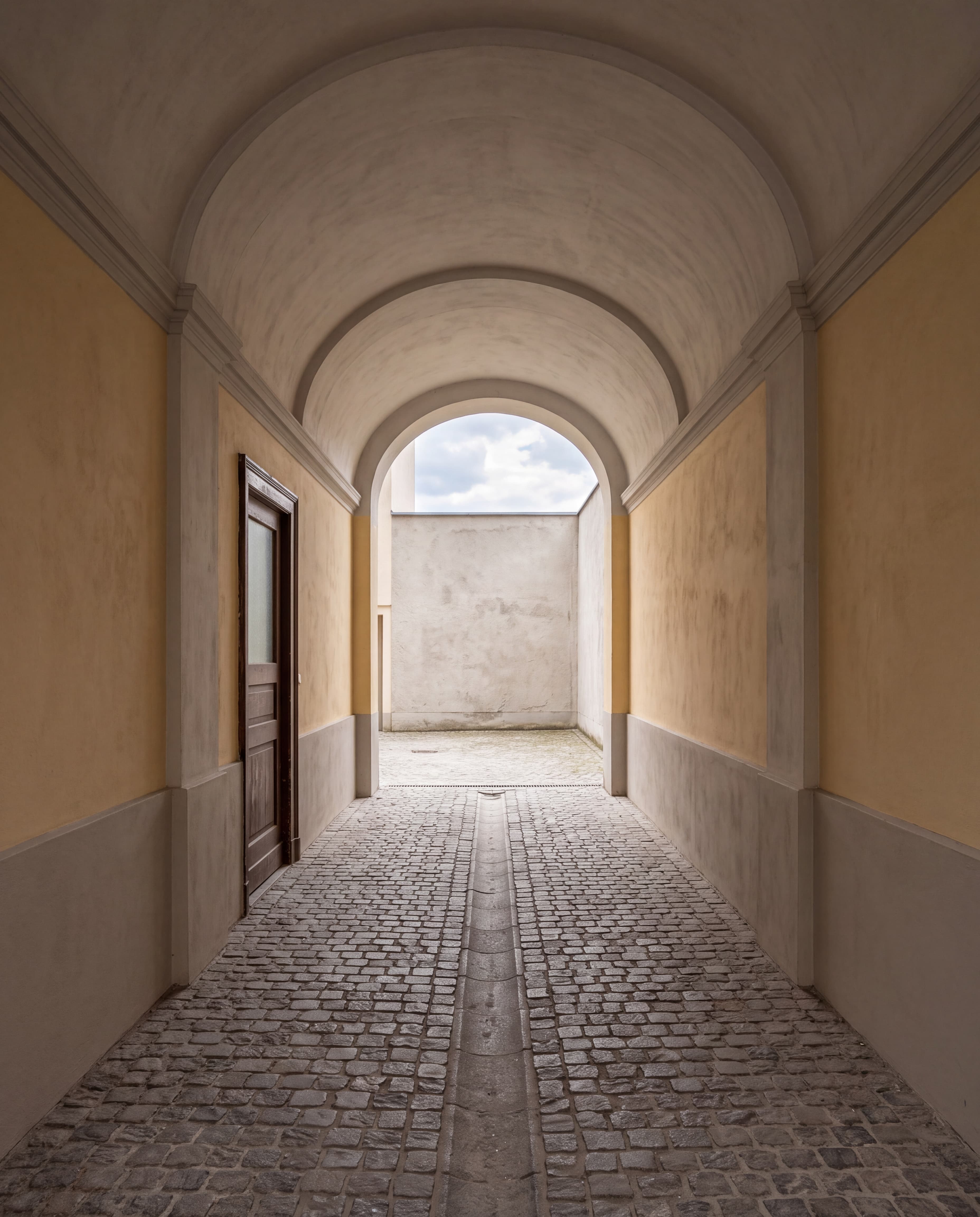
- Rear buildings in the courtyard, reached solely through an archway
- One- and two-room flats with a high share of furnished letting
- Short-let flats within walking distance of Ostbahnhof, Rosenheimer Platz and Wiener Platz
- Converted loft flats above period stairwells without a lift
What usually comes up
- Turnover cleaning of furnished flats between two bookings
- Move-out cleaning at tenant changeover, including box windows and window rebates
- Stairwell cleaning across terrazzo, sandstone and oiled wooden treads
- Regular home cleaning in small layouts with bare floorboards
- Archway, cellar steps and courtyard bin area as part of the building clean
- Final cleaning after departure in buildings with no lift and no storage room
Access and parking
- The Au and Haidhausen lie largely within resident parking zones; visitor tickets cover only a limited period
- In the lanes of the Herbergsviertel a single stopped vehicle blocks the entire carriageway
- Courtyard entrances are often passable on foot only, and the carrying distance from street to flat door costs time
- Between the lower Au and the high bank in Haidhausen there is a noticeable difference in level, with steep and partly stepped connections
- The Auer Dult occupies Mariahilfplatz three times a year; access in the surrounding streets changes during those weeks
What is different here
Routes and short lets
A considerable share of the flats is not in the front building, and those routes govern the time needed more than the floor area does: through the carriage entrance, up a narrower staircase, often without daylight. So before committing we ask about the way to the door, not about its size.
A changeover in a short-let unit is not a scaled-down hotel room. The bed has to be made up out of the sofa, the kitchenette emptied completely, and there is no store for linen — so it travels with us. Anyone costing such units like flats falls short at every changeover.
Box windows and stair rota
Small furnished flats change occupants more often than large family flats, and every change ends in a handover. What drives the hours is rarely the floors but the box windows: two sash layers with a cavity reachable only once the fittings are opened, plus rebates full of old dust. Bare floorboards with open joints are vacuumed and only wiped barely damp, since otherwise they swell.
In buildings with few parties the stairs are in many cases still handled by rota among residents — an arrangement that regularly fails where letting is mostly short term. A fixed weekly or fortnightly appointment replaces the list on the front door. The scope here additionally covers the archway, the cellar steps and the bin area, responsibility for which is often unsettled between front and rear building.
Parking in the district
The approach decides how the whole day is planned. We load at the start and at the end of an assignment and park the vehicle elsewhere in between rather than leaving it standing in a lane. The travel flat rate is charged once per working day and job, not per flat and not per person deployed. Anyone looking after several units in the district is well advised to put the appointments on the same day.
Especially in demand here
Move-out cleaning in Munich
Cleaning before a move-in, a move-out or a handover – matched to condition, scope and your date.
Domestic cleaning in Munich
More time for what matters to you – as a one-off or regularly by calendar.
Stairwell cleaning in Munich
Stairwells, handrails and entrance areas at fixed intervals – agreed with your property manager.
Household clearance in Munich
Clearing a home completely – with papers secured, decisions agreed and receipts for the disposal.
Questions from this district
Can your vehicle reach our courtyard?
Usually not. Archways in the Herbergsviertel and in the lower Au are often too narrow or designated as a footway. Tell us the width of the archway and any steps in the courtyard beforehand, and the carrying distance sits in the estimate rather than in a later adjustment.
How do you treat old stair surfaces?
Terrazzo, sandstone and oiled wooden treads are worked barely damp and pH-neutral, without strongly alkaline products. Cast-iron balustrades and handrails are wiped dry afterwards. Without that distinction, natural stone and timber in a period stairwell go visibly dull within a few months.
Can several holiday flats in the district be cleaned in one day?
Yes, provided the release times fit together. Between Wiener Platz, Bordeauxplatz and Ostbahnhof the distances are walkable and the vehicle stays where it is. Price on request.
What does move-out cleaning cost for a two-room flat here?
Price on request. What tips the balance are box windows, floorboard joints, the painted dado in the hallway and the cellar compartment, not the size of the flat. There is no minimum order value.
Do you also clean the façade of a listed building?
No. Façade cleaning and façade work are not part of the offer, nor are repairs or winter clearing. Indoors we work in safely accessible areas; ceiling stucco is left alone, because it tolerates neither moisture nor pressure.

We come to the Au and Haidhausen
Tell us the property, its condition and your preferred date. We will get back to you personally.