
Service Area · District 3
Cleaning in Maxvorstadt
District 3 is the district of law firms, agencies and university institutes, housed in stuccoed period buildings between Königsplatz, Ludwigstraße and Josephsplatz. Cleaning in Maxvorstadt therefore almost always means existing fabric rather than new build: tall rooms, box-type windows, terrazzo in the stairwell, entry up a few steps to a raised ground floor. MilieuLux plans each building individually, because floor area says little about the effort here.
Around Brienner Straße, Karolinenplatz and Ottostraße, law firms and notaries occupy former apartments: reception in the entrance hall, meetings in what used to be the drawing room, files in built-in cupboards. Such layouts have no cleaning store. Water comes from the converted kitchen or the single bathroom, and the route there passes open client files. Before the first visit we agree which room serves as the water point and which doors stay shut.
Dust collects on cornices and ceiling mouldings where no cloth reaches and where, at this ceiling height, nobody sees it from below — until it comes down again with the first airing. The work is done dry with a telescopic pole, because stucco is gypsum and moisture softens it. That is not an extra but the condition for the cleaning below it to hold at all.
How the district grew
Maxvorstadt was planned on a drawing board. In the early 19th century Munich had outgrown its old walls, and the kings had an entire quarter laid out west of the historic centre — straight streets, clear blocks, generous squares. Then came the buildings it is still known for: the university, the museums, Königsplatz.
It was built in two waves. First in a plain classical style: smooth façades, tall windows, little ornament. The Gründerzeit followed with stucco, bay windows and balconies. Between them stand post-war buildings — the gaps the war left behind.
For us that means old floors, high ceilings and stairwells with stone below and timber above. Almost every office here used to be a flat.
What you will find here
Buildings in the district
- Stuccoed 19th-century blocks with front building, courtyard and rear wing
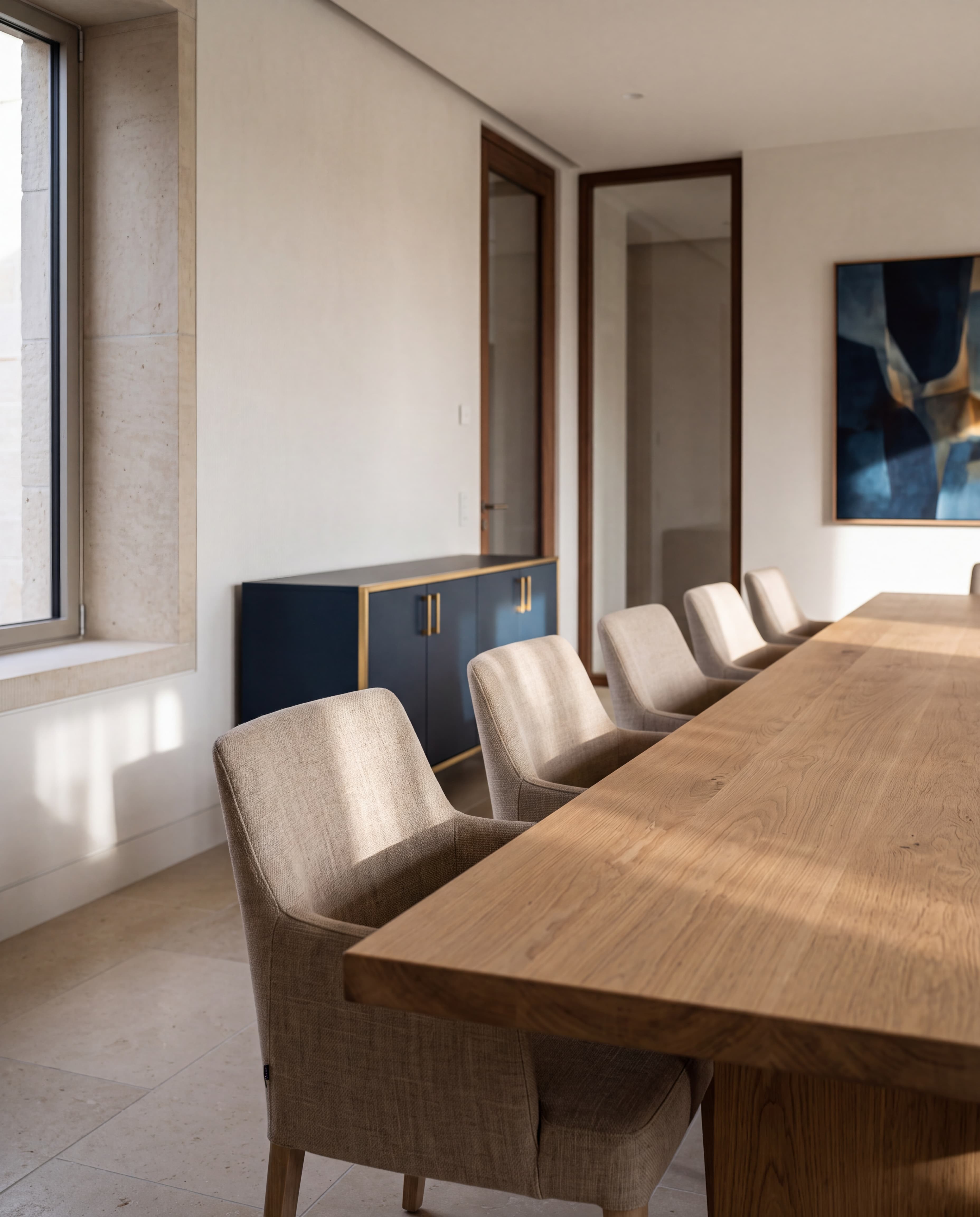
- Beletage offices with ceilings around four metres and moulded cornices
- Raised ground-floor entrances with steps at the door, no level access
- Box-type double windows with two sash layers and four glass faces
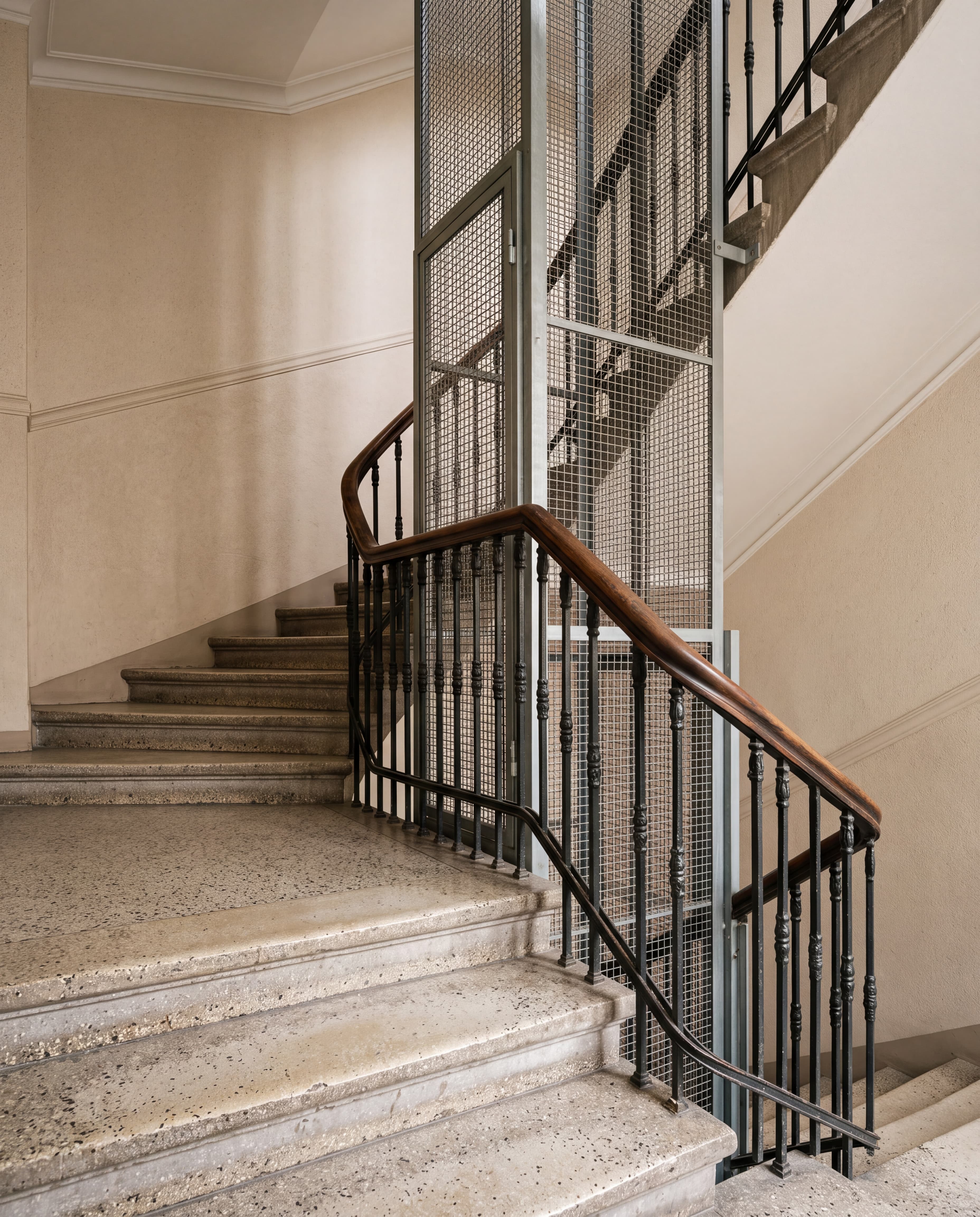
- Terrazzo or marble stairwells, cast-iron balustrades with timber handrails
- Lifts retrofitted into the stairwell void, too small for a cleaning trolley
- Converted courtyard workshops used as agency space, with screed and glass walls
What usually comes up
- Law firm cleaning with a fixed team and clearly bounded rooms
- Glass partitions and full-height door fronts in agency space
- Terrazzo and marble stairwells with neutral products and little water
- Dry dusting of stucco cornices and ceiling roses
- Box windows from inside, both sash layers and the cavity between
- Period parquet worked barely damp rather than wet
- Draught lobby, mosaic floor and the passage from street to courtyard
Access and parking
- All of Maxvorstadt sits within resident permit zones; without a permit, short-stay parking usually ends after two hours.
- Loading bays in Türkenstraße, Amalienstraße and Schellingstraße apply on weekdays only and are rarely free during office hours.
- Nobody stops outside the door on Ludwigstraße; unloading happens in a side street.
- Courtyard gateways are usually locked or too narrow, so equipment goes through the entrance passage.
- Events at Königsplatz and the start of term at LMU and TU change the situation at short notice.
What is different here
Box windows and glass walls
Both casement levels are opened separately; the cavity holds whatever has fallen in over a year. If a casement has been painted over or the fitting is stuck, we do not force it — a cracked putty rebate costs more than an uncleaned cavity. We report it and leave it alone.
Many Maxvorstadt agencies work not in the front building but in the rear wing or a courtyard workshop. There the floors are screed or industrial parquet and the walls are glass. Full-height partitions are cleaned from both sides; the floor channel beneath collects dust that otherwise ends up back on the pane. The noticeable marks are not at the handle but at shoulder height on the edge everyone pushes.
Stairwell and access
A Maxvorstadt stairwell carries daytime visitor traffic that a purely residential block never sees: clients, couriers, students heading to an institute. Terrazzo and marble steps wear accordingly, above all at the edges facing the stairwell void, where a retrofitted lift narrows the flight. In mixed-use buildings it is rarely clear who bears the cleaning cost. We need one contact person, not three.
Because stairwells are tight and doors narrow, we work here with trolleys rather than large machines; everything is carried from the parking spot through the entrance passage. That belongs in the schedule, not in a footnote. If we look after several units at one address on the same day, say a law firm on the first floor and an agency in the courtyard, the travel charge arises only once: it is calculated per working day and per job.
We work indoors only
The façades at Königsplatz and Ludwigstraße are protected as a listed ensemble, and we are asked about this regularly. We work indoors only: no façade cleaning, no ladder work above the pavement, no repairs to render, stucco or ironmongery. Damage we notice is recorded with date and location for the property manager. Clearing and gritting is likewise not part of the offer.
Especially in demand here
Office cleaning in Munich
Clean workstations, well-kept shared areas and appointments that fit your working day.
Glass cleaning in Munich
Glass doors, partitions and display cases – cleaned where hands actually touch them.
Stairwell cleaning in Munich
Stairwells, handrails and entrance areas at fixed intervals – agreed with your property manager.
Kitchen cleaning in Munich
Grease first, everything else follows – from the office kitchenette to the commercial kitchen.
Questions from this district
Where do you park in Maxvorstadt?
The parking spot is settled before the appointment, not hunted for on arrival. Usually it is a side street or a loading bay outside its enforced hours, followed by a walk with the trolley. That does not change the cost: travel is charged per working day and per job, not per person.
Do you clean while client meetings are running?
Not if you prefer otherwise. In law firms the visit usually falls before nine or after six; our window closes at 20:00. Rooms with open files are excluded or worked on only while someone from your firm is present. Which door stays closed is written into the service plan.
What does a period office in district 3 cost?
Price on request. There is no minimum order value. Price on request.
Can you clean our box-type windows?
Yes, from inside and across both sash layers including the cavity, provided the sashes open. Frames painted shut or with jammed ironmongery are left alone and reported. Outer faces only where they can be reached safely from indoors. Façade cleaning and ladder work above the pavement are not included.
Does that also work in a rear wing without a lift?
Yes. The equipment is built around trolleys carried through the entrance passage and the courtyard. The route counts towards the schedule: four storeys without a lift take noticeable time on every visit. We do not use large machines there, as they fit neither through the door nor into the lift.

We come to Maxvorstadt
Tell us the property, its condition and your preferred date. We will get back to you personally.