
Service Area · District 7
Cleaning in Sendling-Westpark
Sendling-Westpark is a district of large apartment schemes. Instead of single period houses with six parties, the work here is about blocks with many flats, lifts, underground parking and long corridors. That does not make the job harder, but different: the time comes from square metres and running metres, not from delicate floors.
The most important point is the scope, and it belongs before the first visit. How many stairwells, how many storeys, which ancillary rooms, how often? We write that down and work to it. That way there is no later argument about whether the bicycle cellar was included — and you can check the price instead of taking it on trust.
Here the time comes from the area, not from the material. A forty-metre corridor takes its time whatever the covering. That is the difference from period buildings, where a small area takes long because you have to be careful. So we use equipment that covers ground and is still carried by one person — a machine that needs a van at the door is not something we use.
How the district grew
The district is young. Where housing blocks stand today, fields and market gardens lay at the edge of Sendling well into the 20th century. Only when Munich urgently needed housing after the war was building done here on a large scale.
The district takes its name from the Westpark. It was created in the early 1980s for an international garden show and was kept afterwards as a public park. Since then it has been the green heart of the area — and the reason the surrounding schemes are so sought after.
Building was not done house by house but in whole schemes: one developer planned the paths, the greenery and the parking along with them. That is why several buildings still belong to one management here, and why a scheme looks the same throughout from the inside. Little has changed since — modernised, yes; rebuilt, hardly.
What you will find here
Buildings in the district
- Apartment schemes of four to ten storeys, with lifts and underground parking
- Long corridors and several stairwells per building
- Floors in screed, tile or cast stone – hard-wearing and easy to maintain
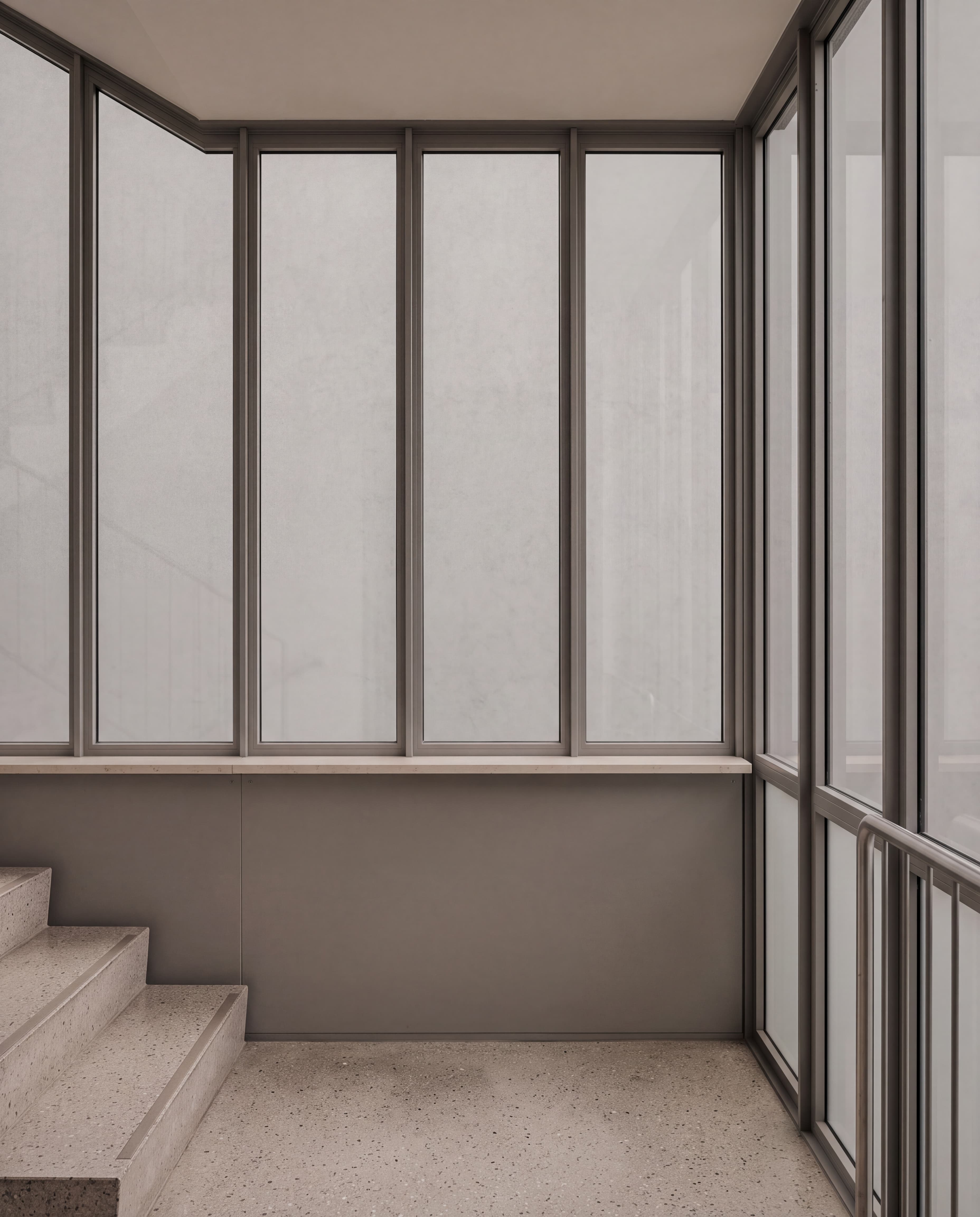
- Large glazed areas in stairwells and entrance halls
- Communal rooms, bicycle cellars, laundry rooms and refuse rooms
- Green space and paths between the buildings, many mature trees
What usually comes up
- Stairwells and corridors on a fixed cycle, often several per building
- Entrance halls with glass, letterboxes and doorbell panels
- Lift car interiors: floor, mirror, control panel and door reveals
- Sweeping and mopping refuse rooms and bicycle cellars
- Large glazed areas in stairwells, at ground level and from inside the opening
- Cleaning flats at move-out or for residents
Access and parking
- Parking is far easier here than in the city centre – the schemes have their own spaces
- If we may use the underground car park, we save time at every visit
- Lifts are available almost everywhere, which helps with long routes inside
- Several entrances per scheme – we need a clear allocation in advance
- Access to refuse room, bicycle cellar and laundry is often separately locked
- One set of keys or a keypad code for all areas shortens every visit
What is different here
Lift and refuse room
We include the lift car at every visit, because it is the most used surface in the building. It is still often left out: the door reveal only shows when the doors stand open, and by then you are standing in the car yourself.
In the refuse room the limit of our job is closer than most people expect, and it is not a convenience: re-sorting waste means taking on responsibility for the separation, and that rests with the management and the waste contractor. So we clean the room and the standing areas, and what is in the bins stays where it is.
Limits and proximity
With the large glazed areas in stairwells, the work ends at the window sill. At ground level we clean outside and in; on the upper floors only from inside, and only as far as is safely possible from an opened window. We do no work at height and we do not touch the façade.
If you manage several schemes in the district, we put them on the same day where we can. That works out better here than in most districts, because the large schemes around the Westpark stand close together: three buildings of one manager are often within walking distance, and the van stays parked in one place for half a day.
Especially in demand here
Maintenance cleaning in Munich
Recurring cleaning to a fixed service plan – each area on its own cycle.
Floor cleaning in Munich
Every floor covering has its own rule – we establish it before the mop goes into the water.
Domestic cleaning in Munich
More time for what matters to you – as a one-off or regularly by calendar.
Hotel cleaning in Munich
Rooms ready inside the turnaround window, everyone working the same sequence, release back to reception.
Questions from this district
Can you take on several stairwells in one scheme?
Yes, that is the norm here. We need a clear list in advance: which entrances, how many storeys per entrance, and which ancillary rooms are included.
Do you clean the underground car park too?
We sweep and mop the accesses, stairs and lift lobbies. Machine cleaning of the whole garage floor is not part of our offer – that needs equipment we do not keep.
Do you empty the bins?
No. We clean the refuse room and the standing areas and report anything lying there that does not belong. Re-sorting and putting bins out is not included.
What does looking after a scheme cost?
Price on request. How long a scheme takes depends on entrances, storeys and ancillary rooms – we look at that beforehand and record it in writing.

We come to Sendling-Westpark
Tell us the property, its condition and your preferred date. We will get back to you personally.