
Service Area · District 6
Cleaning in Sendling
Cleaning in Sendling almost always means two kinds of property in one block. People live in the front building and work in the rear one – joinery, storage, car workshop, small-batch production. District 6 never gave up that mix, and it shapes how we plan here: different floors, different time windows, usually the same yard.
The mix of business and home in one block can be turned into an advantage. If you own both the rear building and the flat at the front, you do not need two visits: both are handled on one working day within a single job, so the travel flat rate applies once. All that is required is that both entrances are open in the same window and that one person holds both keys.
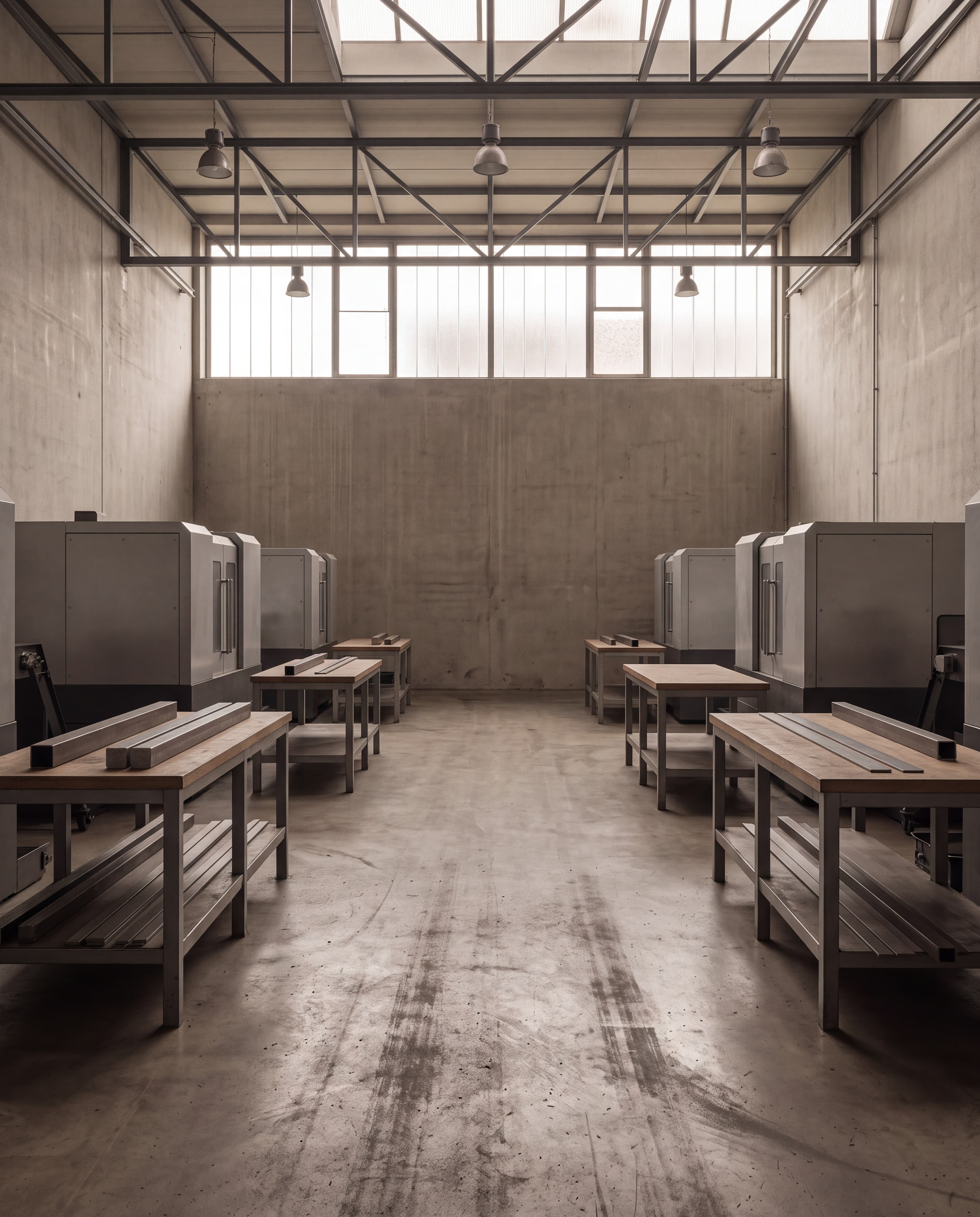
Workshop floors look tough and are precisely not tough when it comes to detergents. Sealed screed tolerates water but not a strongly alkaline dosage, which leaves the seal dull. Where oil or cutting fluid sits on the floor, a quick mop achieves nothing; it takes a surfactant-based method with contact time and a clean pick-up of the dissolved film. We establish beforehand which substances the business works with, because that determines what may go down the drain.
How the district grew
Sendling is one of the oldest villages on Munich soil and lay well outside the city for a long time. The railway and industry changed that: companies settled here and whole streets were built for their workers. The wholesale market hall turned the district into a hub for fruit and vegetables.
The building reflects that: plain apartment houses from around 1900, with 1920s and 1950s terraces between them — sober façades, straight stairwells, small flats. Only in recent years have new residential buildings appeared on former industrial land.
The result is a mix: period, post-war and new build in a small area — often in the same street.
What you will find here
Buildings in the district
- Pre-1914 perimeter blocks along Impler-, Plinganser- and Lindwurmstraße with shops at street level
- Commercial yards and rear buildings: joineries, car workshops, storage and small-batch production
- Converted workshop buildings, today studios, ateliers and open-plan offices
- Post-war rows around Gotzinger Platz and Valleystraße with caretaker rooms and laundry cellars
- The halls and loading ramps around the wholesale market on Schäftlarnstraße
- The Stemmerhof on Plinganserstraße, a historic farmstead now used by small trades
What usually comes up
- Regular cleaning in workshops and storage areas with sealed screed floors
- Staff areas: break room, changing room, shower and works kitchen
- Stairwells, yards and cellar corridors in mixed-use buildings
- Flat cleaning in period buildings with tall rooms, skirtings and window reveals
- Sales floors and offices on the ground floor of the perimeter blocks
- Deep cleaning when a workshop or shop hands the space back
Access and parking
- We reach businesses through the yard entrance; the roller shutter, bollard or barrier must be operable at the agreed time
- Schäftlarn- and Thalkirchner Straße carry the wholesale market traffic in the early morning – we schedule arrivals after it
- Brudermühlstraße gives halls good vehicle access; at peak times traffic backs up before the tunnel
- The residential streets between Harras and Gotzinger Platz are permit-controlled; a reserved yard space saves lead time
- Underground, suburban rail, tram and bus all meet at Harras – small flat jobs without machines we reach by rail
What is different here
Workshop and staff rooms
Not everything in a hall is a surface to be cleaned. Machines, workbenches, set-up fixtures and work in progress are left untouched. What we clean is the floor around them, the traffic routes, the staff areas and shelves explicitly released to us. That boundary belongs in the written service plan, otherwise it is renegotiated at every shift change.
In a small firm the staff rooms decide the overall impression and are still the first thing left undone — usually because they belong to no one in particular. We do them at every visit and not with whatever time is left; work clothes and personal items stay untouched, even when they are in the way.
Period flats and the yard
The flats in the perimeter blocks mostly date from before the First World War. Tall rooms mean more surface on doors, skirtings and window reveals than the floor plan suggests; for the same square metres the time required exceeds that of a new-build flat. Oiled floorboards get little water and a care product matching the existing finish – and we ask which one that is instead of guessing.
The real address here is often the yard. Many rear buildings are reachable only through a passageway that is occupied by deliveries during the day and locked in the evening. Before the first appointment we therefore clarify who operates the gate, whether a fob is needed and whether the yard has a water connection. If it does not, we bring water; that costs time and belongs in the schedule.
Noise as a scheduling issue
Because living and working sit wall to wall, noise matters here in a way it does not in purely commercial areas. A wet vacuum in the yard at seven in the morning concerns not only the business that ordered it but the windows above. We therefore place loud steps in the late morning or early afternoon and announce them in advance if someone in the building is sleeping after a night shift.
Especially in demand here
Shop cleaning in Munich
Sales floor, till area and entrance are done before the doors open.
Domestic cleaning in Munich
More time for what matters to you – as a one-off or regularly by calendar.
Floor cleaning in Munich
Every floor covering has its own rule – we establish it before the mop goes into the water.
Holiday apartment cleaning in Munich
Turnovers in a tight window – fresh linen, restocked supplies, photos at the end.

Questions from this district
Can the business and the flat be cleaned on the same day?
Yes, provided both addresses belong to one job. Price on request. Working time is itemised separately for each part.
We have no parking space in the yard. Is that a problem?
No, but it is a time factor. In the permit-controlled residential streets around Harras the search takes longer on weekdays. If you can keep a yard entrance or loading bay free, that shortens our lead time; otherwise we set off earlier. The search itself is not billed as working time.
Do you also clean machines and equipment in the workshop?
No. We handle floors, traffic routes, staff and washroom areas and shelves released to us. Machines, tools and work in progress stay untouched. Repairs and trade maintenance are not part of our services, and neither is façade work or façade cleaning.
What does cleaning a workshop in this district cost?
Price on request. How many hours are needed depends on the type of floor, how much of it is obstructed and how many staff areas there are – not on hall size alone. There is no minimum order value.
Is a site visit before the first appointment worthwhile?
For yards with several units, yes: access, water supply and floor condition do not show up in photos. Price on request.
Do you also work in the adjoining districts?
Within the Munich city area, yes; regular assignments end at the city boundary. Businesses with a second site in Sendling-Westpark or Obersendling can bundle appointments, provided the distances are short and both entrances are open on the same day.

We come to Sendling
Tell us the property, its condition and your preferred date. We will get back to you personally.